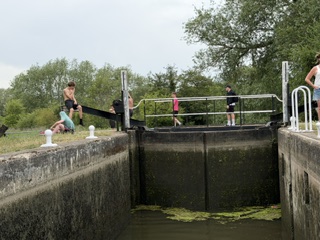
I took a video of one of the locks on the Grand Union being filled. On that lock, like so many others, there are two sets of paddles. The first lot, the ground paddles, let the water into the lock from underneath. The second set, sited on the lock arm, lift the paddles in the gates. Opening the gate paddles first can be disastrous, as water shoots at great speed into the lock from about two foot above the water line.
If your boat is close to the front of the lock you’ll get gallons of water washed over your bow, and you’ll be pushed back with violent force.
Many years ago, when we were new to boating, we made the mistake of opening the gate paddles before the lock was filled to above the paddles. The result was a disastrous flood inside the boat which took hours and hours to clear up, used up all our spare towels to mop up, and resulted in much of our food and clothing getting soaked.
And here is a photo of our boat, Galveston, in Denham Deep Lock on the Grand Union. The sill is higher than our boat. When it says stay clear of the sill, that’s the reason why. Because if you don’t, your boat will take a nose dive and could quite possibly sink. In more shallow locks, the least that can happen is that you damage your prop or rudder.
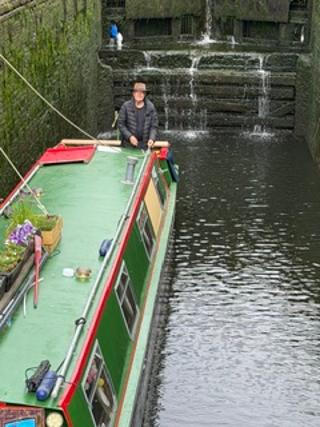
There are other lock hazards, and we’ve experienced them all at one point or other. The scariest by far was when the stern rope got trapped between two coping stones as the boat went down. It was quite a deep and fast lock, and not being able to free the rope was terrifying. The further down we went, the tighter the rope got and the more the boat tipped.
The first indication that something was wrong was the unmistakable singing coming from the rope. Once you’ve heard it, you know exactly what it means. This goes hand in hand with the tightening of the rope. Suddenly it doesn’t slip through your hands like it should. And the next thing you notice, in very short succession, is that the boat is tipping both forwards and sideways.
In a loud lock environment, with water rushing, it’s difficult to communicate with your crew and it can be hard to communicate an urgency with the person managing the lock gates, but the shot of adrenaline, as I realised that I couldn’t free the rope relayed the message just fine. Steve immediately closed the paddles at the bottom end, which stopped the boat tipping further, and re-opened the paddles at the top end, which eased the pressure on the rope and we were able to free the line. Because we reacted so quickly, no harm was done to the boat. Since then we’re hyper-vigilant when we’re in a lock with worn coping stones. And we always have a sharp knife at hand which could cut the rope in an emergency.
This makes us sound like amateur or careless boaters, but we’re not. Accidents and mishaps can happen to anyone. Knowing how to reduce the risk, and knowing how to mitigate makes the difference between a boat getting damaged and telling a scary story in the pub that evening.


Leave a comment