Three months on the boat – how far can we go? Our initial plan had been to go North from Oxford, then the Grand Union to London, through London, then the Kennet an Avon to Bath, and back to Oxford. It seemed doable.
However, we became aware of more and more stoppages on the K&A, some of indeterminate length. This made getting back to Oxford at a set time a little dubious and we decided to postpone the K&A to a future date. This left us with time on our hands. Once in London, we decided that we really should go up the River Lee and Stort. If not now, then when? It’s unlikely that we’d do this trip again anytime soon.
We ended up spending much longer here than we’d anticipated. Firstly, because we were unfortunate to have hit a heatwave on the way out of London, which our boat’s engine objected to. That meant that the engine service that was planned for the end of our journey was put forward. Then there were a few routine appointments we had to attend to in Oxford. But the main reason why we stayed so long was that we’d finally slowed down a bit. No longer were we doing 8 hour days. Three or four hours now sufficed. That left us plenty of time to do …..what exactly?
The change of pace meant that we stopped in places we might otherwise not have made time for, it meant a more leisurely start to the day, it meant spending time on research and digging into the history of places in much more detail than we had ever done before, it meant stopping for a croissant and a coffee and waiting for the rain to stop, it meant talking to strangers, and it meant having time for each other.
The change of pace had a visible impact on Steve. I reminded him the other day that he’d just celebrated his 70th birthday. That was when he vaulted off the boat onto a high wall, only to then jump back on again with the agility of an Olympian and the sure-footedness of a mountain goat.
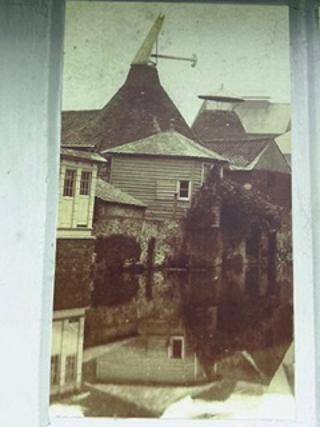
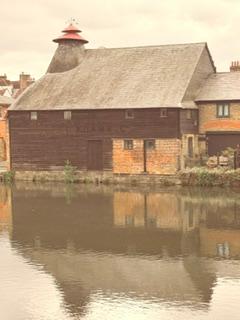
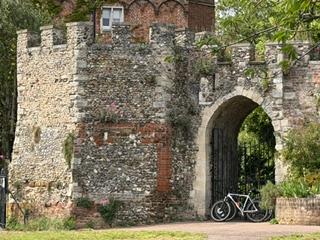
We enjoyed the towns at the end of the River Lee; Hertford and Ware. Because of a long-term stoppage at Ware, we moored at Ware and walked the 3 miles into Hertford. It did not disappoint. Well preserved old mills and warehouses were dotted along the river and the town, and the castle grounds offered the added delight of a vintage car rally.
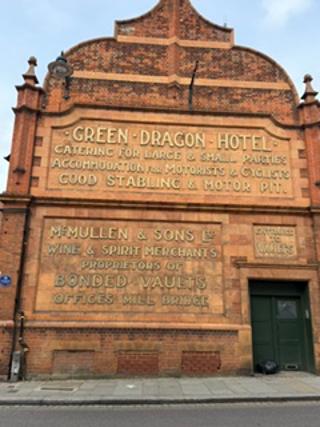
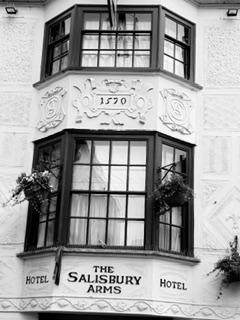
In some ways, although smaller, Ware was even more rewarding. It’s a small historic market town, but one of the longest, continually inhabited settlements in England, with archaeological finds going back to the Mesolithic period.
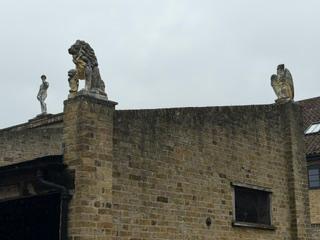
Ware boasts a Grade I listed Norman and Medieval Church, and the main high street is a delight of 16th to 19th Century Grade II listed buildings, full of independent shops and cafés. It’s well worth going down the alleys behind the buildings, many of which are still cobbled and retain the old coaching gates and stables. We found one, which looked like an ordinary modern garage, with statues of lions and griffins on top. A somewhat strange juxtaposition, until we discovered that the garage used to be stables that housed Henry VIIIs horses when he visited.
The river around Ware is lovely, with many 18th C gazebos overhanging the water. You can see people sitting inside, with a glass of wine, a candle lit in the evening, enjoying the view. What a lovely thing to have at the bottom of your garden!
One thing we didn’t manage to see when we were in Ware is Scott’s Grotto, Britain’s largest ornamental grotto, decorated with shells, flint, and coloured glass. But you can’t do everything, and maybe it’ll bring us back here one day, on a day when the grotto is open to the public.


Leave a comment