We’ve been spending a few days on the river Stort. This was a spur-of-the moment decision once we’d reach East London. It seemed foolish not to do this little spur out of London, as it’s unlikely we’ll be back this way for some years.
After leaving Limehouse, we intended to cruise all of the London canals, then going back to the Grand Union and the Thames. However, the waters in London were horribly dirty, the canals crowded and the skyscrapers overwhelming. So, leaving London behind felt like a bit of respite. The Lee and the Stort are two short rivers that take you to Hertford on the Lee and Bishops Stortford on the Stort. The Lee from North London is 21 Miles long, with 16 locks, and the Stort, which joins the Lee at Hoddesdon is 14 miles long with 15 locks.
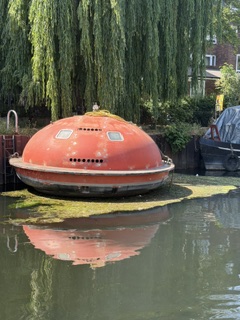
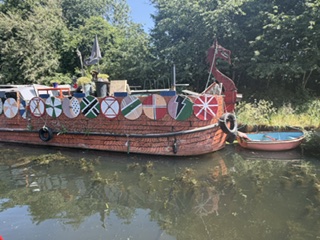
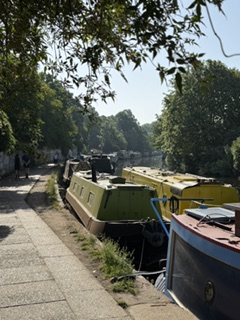
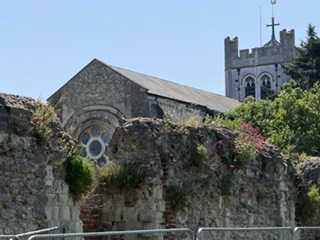
The river Lee became a pleasant river once we passed Tottenham. Gone were the double-moored boats, the weird floating contraptions , the dirty water and the high-rise flats. Instead, we cruised past endless nature reserves, royal gunpowder mills now converted to apartments, ancient towns, ruined abbeys and historic churches.
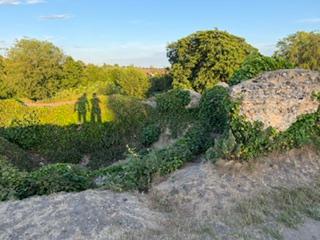
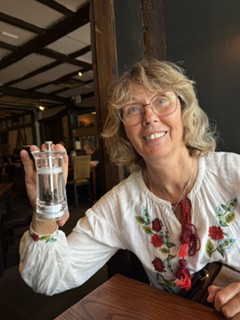
The river Stort is surrounded by water meadows and ancient mill buildings, maltings and warehouses. In Old Marlow there is a mill building, now a sad Beefeater, which claims to be on a site where a mill stood since AD1000. As a spoof we took a photo of a peppermill inside the Beefeater as proof that a working mill still exists on the site.
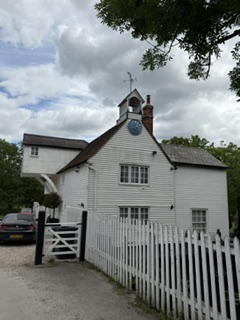
The Stort was originally a relatively shallow tributary to the river Lee, so, in the 1760’s the river was canalised. It was widened, straightened and dredged, which made it much easier for barges to use. Locks, weirs and water control structures were installed to maintain sufficient water depth for navigation, and wharfs and basins were built in Bishop’s Stortford, Sawbridgeworth and Roydon amongst other places.
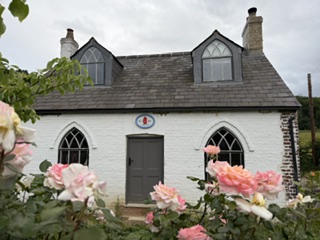
One of the chief engineers responsible for creating the Stort Navigation was Sir George Duckett. Even today you can see cottages along the Stort which display his emblem, the Red hand of GD, modelled on the Red Hand of Ulster, which was part of his heraldic identity. The plaques mark buildings connected with the Stort navigation, and houses displaying it were occupied by people licenced to operate parts of the navigation system, collect tolls and maintain the waterways. There is a house in Sawbridgeworth, apparently new built, but in the style of an old cottage, that still displays the sign. I find this continuation of history immensely satisfying.
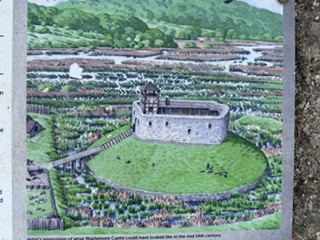
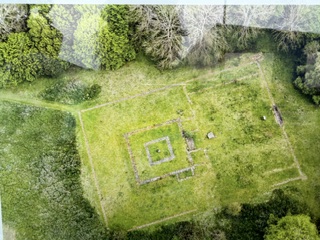
Nowadays, the river is used by holidaymakers, and what a fine stretch of water it is. There is plenty to see. In Bishop’s Stortford the ruins of Waytemore Castle, in Harlow Old Town, in the middle of an industrial estate, the site of an ancient temple, built by the Romans, but used as a site of worship since Celtic times. The mills and maltings along the river are fascinating buildings, now repurposed as warehouses, antique shops, homes, offices and hotels. In Roydon, on the village green the original stocks and village lock are still standing, although all but one pub have disappeared.
The Stort retains much of its natural, meandering character and many sections today follow the original course of the river. It’s a pleasant place to cruise and walk, with plenty of plaques along the towpath telling the history of the area.


Leave a comment