What do you associate Milton Keynes with? For me, MK is a place with loads of roundabouts, drab shopping centres, an indoor ski slope and other adventure-style activities. I know that MK was built as a new town in the 1960’s and that in the 1980’s it had some self-build schemes where communities got together to build their own houses.
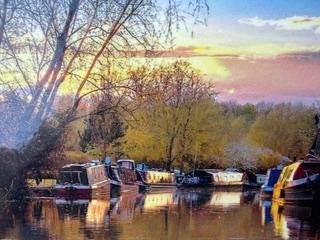
However, arrive by canal and all you see is parks, playing fields, playgrounds, footpaths and not much else. It took me totally by surprise. We thought we’d need to moor, as so often in towns, at the bottom of someone’s garden. Not so. There are 48-hour moorings by the parks, and the footpath has plenty of good mooring spot with rings. The image above was taken from one of the park’s information boards.
We explored just a few of the parks. There are landscaped paths, wild flower meadows, woodland trails, off-track cycle routes, mazes, cricket pitches, one has a modern beacon at its top, and most have beautiful statues.
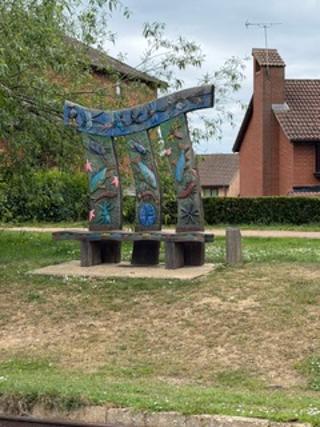
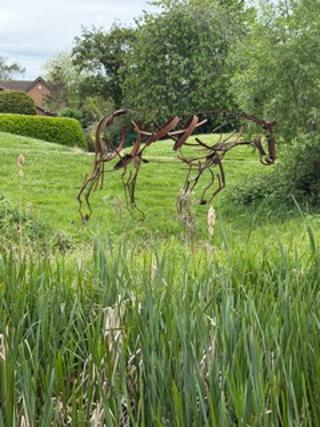
In fact, rather than confusing roundabouts and plastic cows, MK should be famous for its green spaces – 6,000 acres of it, which amounts to at least 40% of the entire town. This is the equivalent of 4,500 football pitches or the size of the entire town of Windsor or Lymington.
Unlike many English cities that evolved gradually over centuries, Milton Keynes was consciously designed as a modern city, while preserving older villages inside it. As a result, medieval churches, village pubs and historic market streets exist alongside modern boulevards and business districts.
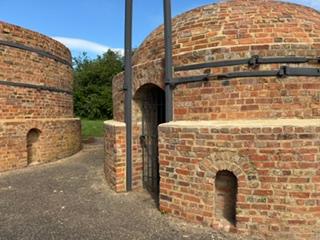
Brick kilns in one of the parks
When we went to a pub a couple miles away from where we moored, we walked the entire distance on footpaths. Our visit was a real eye opener and was well worth a stop-over to explore further.


Leave a comment