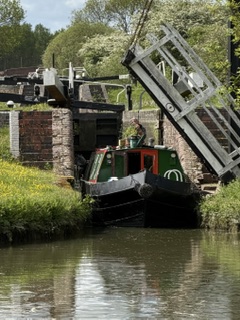
According to a volunteer lock keeper, absolutely not. My verdict? Absolutely yes.
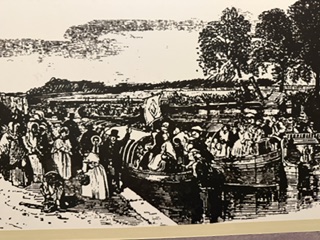
They didn’t build a canal with a 13-lock flight for nothing, so it’s worth exploring what’s at the end of it. An article in the Northampton Mercury from 10 August 1761 records that “no less than 38 barges laden with coals and other merchandise, and adorned with flags and streamers, came up with the t of ease to the public wharf, preceded by a band of music, drums and French horns. The most general illuminations that were ever known, bonfires, ringing of bells, and every other demonstration of joy concluded the evening. (information from Northampton Museum).
The canal enabled goods from Northampton to be shipped to London and Birmingham faster and safer than existing roads, and because of its location in a valley, railways of old found it difficult to get up the hill from Northampton. The canal, therefore, had significance for much longer than other cities.
What we found was a city rich in history and interesting architecture.
Northampton has one of only 4 remaining round Norman churches left in the country, built around 1100 AD, and modelled on the Holy Sepulchre church in Jerusalem. (www.holysepulchre.co.uk). They have open days about once a month, unfortunately not while we were there.
And Northampton was known the world over for shoemaking and leather production. The industry shaped the town’s economy, architecture and identity for centuries. Shoemaking in Northampton dates back to the 12th and 13th centuries, and even King John bought boots there in 1213. By 1903, there were over 300 shoe factories in the town, employing over 16000 shoemakers. Many of the older buildings in the city, and most definitely the most interesting ones, are either re-purposed shoe factories or warehouses. This is industrial architecture at its best, as the buildings are still in use today.
The local museum is well laid out, with a shoe museum in the basement and an art gallery. The remainder of the museum is given over to the history of Northampton, and well worth a visit.
We moored at the very end of the canal, just before the lock to the river Nene, which was ideal for walking into town and a choice of decent supermarkets.
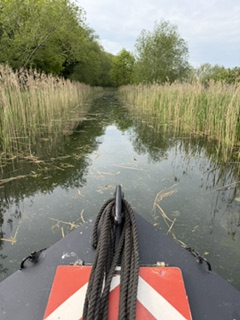
Yes, the locks were a slog, but the canal was alongside nature reserves and flood plains along the entire stretch, and the water was so clear that we saw right to the bottom with fish swimming under our boat.


Leave a comment